What Is Gyp-Crete and Why Is It Used in Construction?
At Gold Hill Builders, we believe a well-built home is about more than just what you see on the surface. Some of the most important parts of a project are the materials working quietly behind the scenes to improve comfort, performance, and durability. One of those materials is Gyp-Crete.
If you’ve heard the term before but aren’t quite sure what it is, you’re not alone. Gyp-Crete is often used in high-performance construction projects, multifamily buildings, and custom homes where sound control, fire resistance, and radiant heat efficiency matter.
What Is Gyp-Crete?
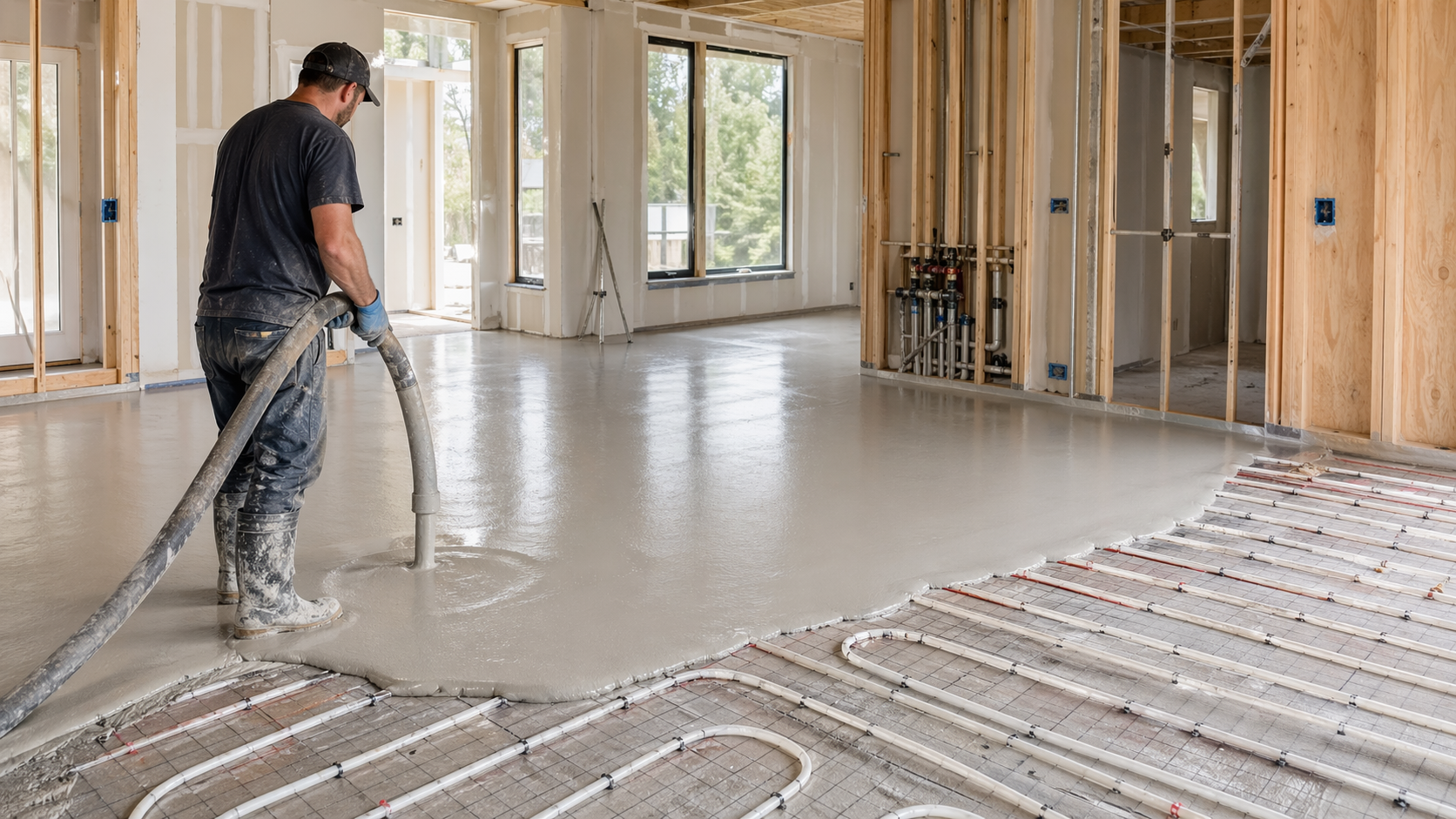
Gyp-Crete is a gypsum-based underlayment that is poured over subflooring. Once installed, it creates a smooth, level surface that can be used beneath a variety of finished flooring materials.
It is commonly used in both residential and commercial construction and is especially popular in projects with radiant floor heating systems. Because it flows into place as a liquid, it can easily surround heating tubes and create consistent coverage across the floor.
Why Builders Use Gyp-Crete
There are several reasons Gyp-Crete is chosen over traditional methods in certain applications:
1. Great for Radiant Floor Heating
One of the biggest advantages of Gyp-Crete is how well it works with radiant heat. It fully encapsulates the heating tubes, which helps distribute heat evenly across the floor. This can improve comfort and help the system perform more efficiently.
2. Smooth, Level Surface
Because it is poured in liquid form, Gyp-Crete creates a very flat and consistent surface. This makes it a strong foundation for finished flooring and can help reduce inconsistencies in the subfloor.
3. Sound Reduction
In multi-story homes, condos, and apartment buildings, sound transfer between floors can be a concern. Gyp-Crete can help with sound control, making spaces feel quieter and more comfortable.
4. Fire Resistance
Gypsum-based products are often valued for their fire-resistant properties, which is another reason Gyp-Crete is commonly specified in certain types of construction.
5. Lighter Than Traditional Concrete
Gyp-Crete is much lighter than standard concrete, which can make it a smart solution in projects where structural weight matters.
Where Is Gyp-Crete Commonly Used?
Gyp-Crete is often found in:
Custom homes with radiant floor heat
Second-story additions
Multifamily buildings
Townhomes and condominiums
Commercial spaces needing sound or fire-rated assemblies
It is especially useful when a project calls for both performance and precision.
Is Gyp-Crete the Same as Concrete?
Not exactly. While both are used to create a solid floor surface, Gyp-Crete and traditional concrete are different materials with different purposes.
Concrete is generally stronger and used for structural applications, while Gyp-Crete is typically used as an underlayment, not a structural slab. Its purpose is to create a level surface and improve the performance of the floor system above and below it.
Important Considerations
Like any specialty material, Gyp-Crete needs to be installed properly and used in the right setting. Moisture exposure, drying time, floor finish compatibility, and project sequencing all need to be considered carefully.
That’s why it’s important to work with a builder who understands not just how to install materials, but when and where they make the most sense.
The Gold Hill Builders Approach
At Gold Hill Builders, we look at every project as a full system. Materials like Gyp-Crete may not be the flashy part of a home renovation or new build, but they can make a major difference in how a home feels and functions every day.
Whether we’re building a custom home, planning a major renovation, or coordinating a high-performance floor assembly, we believe thoughtful construction decisions lead to better long-term results.
If you’re considering a project with radiant heat or want to better understand the materials being used in your home, our team is always happy to walk you through the details.