
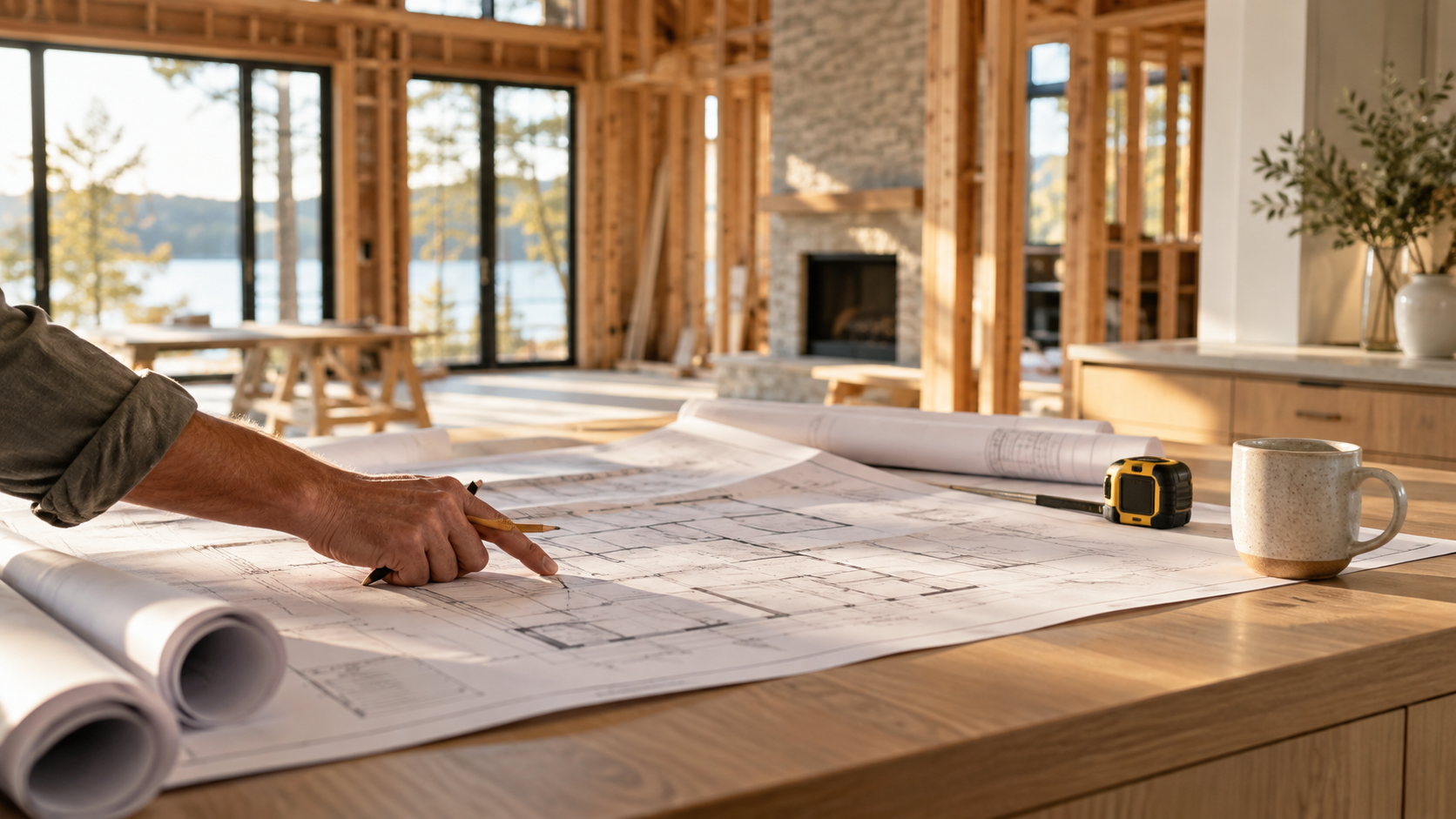
If you’re planning a custom home or a major renovation, the standard advice is to get three bids and compare. It sounds sensible. But a great piece in Fine Homebuilding by builder Jeremy Martin explains why that process often sets homeowners up for frustration, and it’s something we talk about with clients all the time.
The problem with “apples to apples”
In a typical high-end project, the homeowner and architect finish the design first, then send the plans out to a few builders for pricing. The trouble is that no builder can spend the hours needed to fully research every spec and detail for free. So bids end up full of guesses and assumptions, and every builder makes different ones.
The homeowner sees three numbers that look comparable and often picks the lowest. Then construction starts, the hidden assumptions come to light, and the change orders begin.
Where budgets go sideways
Martin points out that when a builder starts with a rough ballpark, they pad it with contingency to cover the unknowns. When that cushion runs out, the options are all uncomfortable: more money, more time, or giving up something the homeowner was counting on. Nobody is acting in bad faith. It’s simply what happens when planning gets skipped.
The better way: plan it before you build it
His solution is real preconstruction planning. Bring the builder in early, work through the details up front, and figure out the hard questions before the first shovel hits the ground. The result is a price you can trust and a project with far fewer surprises.
How we see it at Gold Hill
This lines up closely with how we like to work. The earlier we’re part of the conversation, the more we can help: catching costly details while they’re still lines on a drawing, giving honest numbers, and making sure you know exactly what’s included. A careful plan up front is what keeps a beautiful project on track.
If you’re starting to think about a build or renovation, we’d love to talk early. Reach out anytime.
Read the full article, “Better Bidding for Residential Construction and Remodeling” by Jeremy Martin, at Fine Homebuilding.